Top Social Icons

Responsive Full Width Ad

Left Sidebar
Left Sidebar
Featured News
Right Sidebar
Right Sidebar

Sunday, 4 October 2015

Gov El Rufai’s A Popular Liar, Jonathan Never Spent Billions On October 1 Events

The government of former President Goodluck Jonathan has responded to allegations by Kaduna Governor Nasir El Rufai that the regime spent “billions of naira” on Nigeria’s independence celebrations.
El Rufai made this allegation on his Facebook page in an attempt to praise President Muhammadu Buhari for being “prudent” in spending allegedly spending N70 million on the October 1 celebrations this year.
In a statement signed on October 3, 2015 by erstwhile Minister of National Planning, Dr. Abubakar Sulaiman, dismissed El Rufai’s commentary as and “ungodly fabrication of lies” and the “rantings of a favour seeker”.
“It is high time government functionaries desisted from abusing their immunity by destroying history and trading on lies just to gain cheap popularity or curry one favour or the other from certain quarters,” the statement read. “Perhaps, President Olusegun Obasanjo was right in his assessment of El Rufai when he said in his latest memoir, My Watch that his vivid recollection of him (El Rufai) is his penchant for lying, for unfair embellishment of stories, and his inability to sustain loyalty for long.”
The statement provides a breakdown of Independence Anniversary spending from 2012 – 2014 and says that 2010 and 2011, which are not readily available are similar to the other years under President Jonathan.
Read the full statement below:
We were taken aback by the recent comment reportedly credited to His Excellency, Governor Nasir El-rufai where he claimed that the immediate past President, His Excellency, Dr. Goodluck Ebele Jonathan’s administration spent N64billion to cover the country independence anniversary spending in five years.
The break down, according to the governor showed that N13 billion was spent in 2011, N15 billion in 2012 and N14 billion in 2013 and N22 billion allegedly spent in 2014.
This tissue of lies was contained on his Facebook comment on Thursday.
Ordinarily, we would have allowed this to go as just ranting of a favour seeker, but for the sake of ordinary Nigerians who were abreast of happenings under the administration and also those who never did, we will like to set the record straight.
It is important to correct the misinformation so that the unsuspecting public would not be misled.

For the record, a breakdown of our anniversary spending between 2012 to 2014 amounted to N332.6 million. We challenge the Office of the Government of the Federation( OSGF) to publish these details for the consumption of the public.
For the record, a breakdown of our spending for this event between 2012 and 2104 goes thus; 2012-107.6 million; 2013 – 45 million and 2014 had 180 million. So, the question here is where did the billions as claimed by El Rufai emanate from?
Even though that of 2010 and 2011 are not handy now, but it should be known that they all fall within the same bracket as the one stated, except that the 2010 anniversary was a Golden one when the country marked her 50th year of independence. But even then , not such outrageous sum was either budgeted or expended.
Again, it is germane to explain the increase in the 2013 anniversary spending for the purpose of accountability. The National Honours Award Investiture was incorporated into the celebration, thus making it two events in one, hence the N174,800,000.00 budget.
We also want to add that the said award investiture could not hold in 2013 and the approved budget rolled over and was utilized to organise the investiture in 2014.
It is high time government functionaries desisted from abusing their immunity by destroying history and trading on lies just to gain cheap popularity or curry one favour or the other from certain quarters.
Perhaps, President Olusegun Obasanjo was right in his assessment of El Rufai when he said in his latest memoir, My Watch that his vivid recollection of him (El Rufai) is his penchant for lying, for unfair embellishment of stories, and his inability to sustain loyalty for long.
That exactly is what El Rufai has done with his ungodly fabrication of lies against Jonathan government.
One hopes that President Buhari would be on guard against being misled by the likes of El Rufai who are hell bent on misinforming the Nigerian publics.
Signed
Dr. Abubakar Olanrewaju Sulaiman,
Immediate past Minister/Deputy Chairman, National Planning
3-10-2015

Source

Only in the Zoo Nigeria:APC Guber Candidate ‘Audu’ to Refund Stolen N11billion if Elected

Alhaji Hadi Ametuo, Chairman of the Kogi state chapter of the All Progressives Congress, APC has promised Kogi Indigenes that his party’s gubernatorial candidate , Prince Audu Abubakar, would return the over N11 billion he allegedly stole while in office, if he’s re-elected.


According to DAILY POST, responding to questions from the media regarding Audu’s 11billion naira EFCC case, he said “Nobody is a saint. No governor can claim he has not done any malpractice or stolen anything during his time in the office.
“We heard of Saraki’s case, even Tinubu is being accused of stealing funds but the truth is that Prince Abubakar Audu has pledged to return the money to the Kogi treasury when he gets elected on the November 21st, yes he will return the 11billion naira or even more than that and that will add to the Kogi economy”.

Source DAILY POST

Saturday, 3 October 2015

Prof. Anya: Nigeria’s founding fathers did not share common vision

Prof. Anya O. Anya, a public affairs analyst, is Pro-Chancellor and Chairman, Governing Council, Michael Okpara University of Agriculture. Anya shares his perspectives on Nigeria, 55 years after independence in this piece

The founding fathers of the putative Nigerian nation did not share a common vision of the structure and future of their country. This hiatus threw into bold relief the immanent differences in the emerging polity and consequently heightened ethnic tensions. The kind of politics that this environment of contentious disputation encouraged gave the alibi for the intervention of the impatient, inexperienced, even if idealistic military officers. The apparently one-sided casualty list that came with the intervention of the military only heightened ethnic tensions which was to culminate in the pogrom in the North which claimed the life of tens of thousands of Eastern Nigerians of all tribes. The new military government’s effort to enthrone unitarism in the constitutional structure of the young nation only exacerbated the already polarized situation. It is instructive to note as a matter of historical detail that at the point of military intervention, the

political crises that created the atmosphere of disunity involved the North which controlled the Federal Government and the Yoruba West whose dominant leader Obafemi Awolowo had been imprisoned, thus factionalizing the ruling party in the Western Region. Eastern Nigeria was not in conflict with the West or the North at this point.

In the immediate years preceding the military intervention the efforts of the Easterners to broker peace was doomed to failure by the perception that the Eastern government was in favour of the Awolowo faction of the Action Group as demonstrated in UPGA despite being a coalition partner of the North in the Federal Government. When the pogrom erupted and Awolowo (now released from prison) agreed to work with Gowon in the new government now totally dominated by the North, the last fragment of trust and confidence were now shredded setting the stage for an avoidable and with hind-sight completely unnecessary civil war. This marked a water-shed in the failures of leadership in Nigeria.
In retrospect, the 13-year military intervention sowed the seeds of many of the ills that have come to bedevil efforts at building a nation. The hierarchical command structure of the military (with immediate effect) was ill-suited to the patient and conciliatory style that governance in a plural society demanded.

In the process, the essence of major institutions such as the civil service, the judiciary and the universities were destroyed.

The most pernicious and far reaching in its effects was creating an environment in which fundamental values of the society were compromised particularly the values of excellence and merit. It is an acceptable principle in nation building to give incentives to vulnerable entities in the society to improve on their situation and aim for improvement in their circumstances.

This is the basis of practices that have often been lumped together as affirmative action. This is in clear contrast to the practices of Federal character and the concept of educationally disadvantaged states which were decreed into existence against the lessons of experience from other nations. The bug-bear in the failure of these initiatives is the notion of entitlement that forecloses extra effort and the deployment of initiatives on the part of the vulnerable target populations. This is why no state that was classified as educationally disadvantaged more than forty years ago has improved on its ranking.

Some cultures in Nigeria have a tendency towards clientilism, nepotism, subservience, even sycophancy and authoritarianism. The period of military dominance heightened those tendencies and encouraged the emergence of an alternative governing elite with venal values encapsulated in the promotion and dominance of self. With their progressive upward climb to the higher reaches of influence and governance politics became more divisive and polarized. The language of politics became abusive and less tolerant. In practice manipulation became the order of business in governance and particularly in electoral matters. This was a stage ready made for the emergence of political god-fathers.

Politics became dominated by name-calling and the repetitive mouthing of inaccuracies, inanities and even untruths all in the name of political propaganda. If truth be told we have watched apparently helpless at the progressive emergence and evolutionary upgrade in our politics of those whose stock-in-trade has been fraud and mendacity. The situation has not been helped by the fact that the military did not tackle the two fundamental problems that the colonial authorities left behind for us: the apparent fraud in the census and in electoral matters and the lop-sidedness in the governance structures of the country in a supposedly federal nation. They made it worse.
The challenge for leadership given this plethora of problems is to begin again but the question is from where and who will bell the cat?

Despite the inclement environment in which leadership must operate in Nigeria, the review of modern research examined earlier suggests that the appropriate leadership quality needed to meet the current demands of leadership in Nigeria is what we earlier referred to as boundary spanning leadership “which is the ability to create direction, alignment and commitment across boundaries in service of a higher vision or goal…”.

The higher vision being to build a new Nigeria where equity, justice and prosperity is available to all regions and constituencies. In the pursuit of this goal we must remember and take cognizance of

the global environment. As has been stated elsewhere.

“….Gone are the days when leaders work within an intact group in which leaders and followers share a (common) culture, values and interests. Instead today you must lead across groups, at the juncture where wide-ranging experience, diverse expertise and varied identities intersect. It is here at the inter-section where two powerful human forces – differentiation and integration – collide that you can enact six boundary spanning practices to catalyse collaboration, drive innovation and transform organisation…”

WAY OUT OF THE WOODS

From all that has been said so far, it seems evident that Nigeria is in desperate need of a leadership that can transcend and span all the boundaries that presently encumber Nigeria – ethnic, religious, cultural and psychological. In this effort the challenge is to build a united, integrated and cohesive national entity. It would have to replace the current centrifugal tendencies in the polity with counteracting centripetal forces. It was the late Albert Einstein who had observed that problems cannot be solved at the current level of awareness that created them. In other words the solution of challenging problems often involves a mind-set change. Such a fundamental change can be the genesis of transformation and hence paradigm shifts from entrenched positions. It would often involve leaders who can learn to put themselves in the other compatriot’s position.

Such leaders often evince humility and steadfast determination verging on passion. Apart from humility and passion, such leaders demonstrate on overarching umbrella of rock-solid integrity, honesty, charity and compassion. These are the values that will drive them to connect with the followers.

Indeed, “when safety, respect, trust, community inter-dependence and reinvention characterize the interactions between groups, those groups will achieve something together above and beyond what they could achieve on their own…” namely a society anchored on truth, justice and equity. Another

Utopia? What is demanded is nothing short of the re-invention of Nigeria. So who will bell the cat?

POSTSCRIPT
In the last five months we have gone from the euphoria of the change mantra to the reality check of governance in a plural society. Now we have passed the hallowed magic threshold of 100 days. We have seen inelegant efforts to espy some success verging on the sycophantic, to the raucous cacophony reminiscent of a  bolekaja  melee as part of the condemnatory admonition of the less impressed. There is no question that when the unexpected happens there is the opportunity for a new beginning. Such was the expectation of many Nigerians on the emergence of General Buhari. Three months on the chair of governance two strands have emerged besides the unrepentant cheer leaders – those who have voiced disappointment on the apparent slow pace of government business and those who have voiced apparent horror on the apparent sectional tilt of his appointments. Of those who raise eye-brows on the slow pace many have been disappointed that for a man who ran for the office a record four times he should have come to office better prepared and to hit the ground running. Some have counselled patience.

At the last count out of thirty two appointments including the strategic appointments of Secretary to the Government of the Federation and the Chief of Staff to the President of the Republic, twenty six have been Northern. Almost unthinkable in a plural society some would say. Some have seen this as a loud trumpet proclaiming and reinforcing the view that the disposition of GMB cannot work with all Nigerians except those from his geographical enclave. Some have made the excuse that it is too early in the day to judge while some have counselled that this is just the beginning of the bazaar of appointments since the President of Nigeria has a patronage bag of over five thousand offices to fill. Few have been impressed with the post hoc alibis. It has been for some beyond belief that a man who had for the better part of his political career, some would say unfairly, the political tag of a religious bigot or fanatic as well as that of an unrepentant and unapologetic Northern irredentist to be so insensitive to the potential signals from his first appointments in a plural society smells of a hidden agenda. Others have counselled caution.

Whatever may be the case GMB must now face the challenge that any leader must face when perception collides with reality.

It is a hard call but it is not impossible to change if the strategy for amelioration is built on the chemistry of truth, justice and equity. Obviously, the challenge before GMB is similar to the challenge that faced GEJ in 2013 when it became obvious to some of us that the pan-Nigeria coalition that propelled him to office in 2011 was not in alignment with the governing coalition that he had put together for governance majorly around the PDP. The rest as the pundits would say is now history. The options for Mr. President are clear and historical. His failure to build the Nigeria of the dream of Nigeria youth could generate a historical cataclysm of unthinkable proportions. He deserves better.

Source vanguard

Boko Haram terrorists: Buyer Remorse Sets In Against Buhari And His Noisemakers Brigade

“…How was it possible for this terrorist group to act with such impunity? It took nearly two weeks before the government even commented on the crime. This lack of reaction was symptomatic of why the administration of President Goodluck Jonathan was swept aside last month… What I can pledge, with absolute certainty, is that from the first day of my administration, Boko Haram will know the strength of our collective will and commitment to rid this nation of terror, and bring back peace and normalcy to all the affected areas…”
So what has been President Buhari’s record on the fight against Boko Haram? Between 2009 and when he took over power on May 29, 2015?
The Facts: Before Buhari took office, there were 14,000 deaths associated with Boko Haram terrorist attacks, an average of about 180 deaths per month. Since May 29 till September 30, 2015, as reported by Agence France-Presse (AFP), Boko Haram has killed 1,260 Nigerians, an average of 315 deaths per month, and a 75% increase in monthly death rate.
On our Independence Day, October 1, under the watch of our tough-talking retired general and Commander-in-Chief, two bombs went off in Maiduguri killing at least 14 Nigerians.
The day after, October 2, another set of bombs exploded at a market, police station, and a bus station, in the nation’s capital, killing 15 and over 40 injured. The 2015 Independence Day bomb blast was the first since the 2010 Independence Day blast that claimed 12 Nigerian lives.
On the Chibok school girls matter, Buhari also made a commitment, in his New York Times op-ed, he wrote:
“…I say to every parent, family member and friend of the children that my government will do everything in its power to bring them home.”
But, recently, at a press conference, in Lagos, the acting director of Defence Information, at Nigeria’s Military Headquarters, Abuja, Col. Rabe Abubakar, said:
“…We have continued to make rescue efforts, and we will do all within our powers to bring the girls. However, we will not rush to do this. It requires diligent intervention and a high-level operation to rescue the girls. In due time, every captive of Boko Haram will be release.”
This comment is not sitting well with Nigerians. An online commentator who is called, Smart G, captured the sentiments of many Nigerian when he said on the comments section of the news report in Punch:
“This is the most callous statement ever in the history of Nigeria. Over 500 days in captivity and some people think it doesn’t matter. And there is no need for “rush”?”
The lack of seriousness and commitment of this noisemaker’s brigade to defeat Boko Haram, was in full global display when at the 70th United Nations General Assembly meeting focused on Boko Haram, the Nigerian government was absent. Reuters reported the disappointment expressed by diplomatic of Western countries at the event. The article said:
“Although Boko Haram insurgency is largely Nigeria’s problem, President Muhammadu Buhari and his delegation were absent at a United Nation’s meeting to discuss and proffer solution to the problems of Internally Displaced Persons (IDPs) in the country… to the disappointment of US and European Union diplomats..”
Reacting to this monumental blunder, the President’s spokesman, Shehu Garba said:
“…The meeting at which Nigeria was reportedly absent was not one the official events of the United Nations for which President Muhammadu Buhari and his modest delegation are in New York.”
Again, overwhelmingly, Nigerians were not impressed as expressed by a responder in the Vanguard newspaper, Omo Lagos, who said:
“Garba Shehu should realize that we are not all fools in this country. His explanation for obvious dereliction of duty by the Nigerian delegation is to say the least naive. This is what you get when, appointments are based on nepotism and tribalism. Who told him that the meeting was unofficial. What they succeeded in conveying to the whole world is that we are a nation of unserious people.”
From all empirical evidence, Buhari’s track record on defeating Boko Haram doesn’t inspire confidence.
The indices for success are heading in the wrong direction, and CHANGE is therefore imperative, now, or else the change we will be left with, is that in our wallet, if we are lucky.
Source thetrentonline

Play/Download (7 PM) Segment of Radio Biafra LIVE Broadcast of 03 October 2015

Dictactor Buhari Gov’t Bypassed Immigration Service And Granted Visa To Fugitive ISIS Cleric

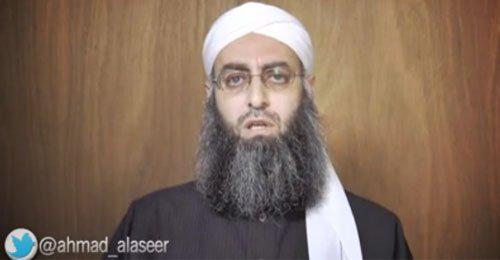
File: Sheikh Almad Al Assir | AP
The Nigeria Immigration Service (NIS) has denied playing any part in the process that led to an known ISIS leader in Lebanon receiving a visa to visit Nigeria. Rather, it was the Minister of Foreign Affairs, which is under the supervision of President Muhammadu Buhari that issued the visa.

In August, The Trent was the first newspaper in Nigeria to report that a radical Muslim cleric, Ahmad al-Assir had been arrested by Lebanese authorities as he attempted to leave Lebanon to Nigeria via Cairo.

RELATED: Nigerian Government Grants Visa To ‘ISIS Emir’, A Fugitive Lebanese Cleric

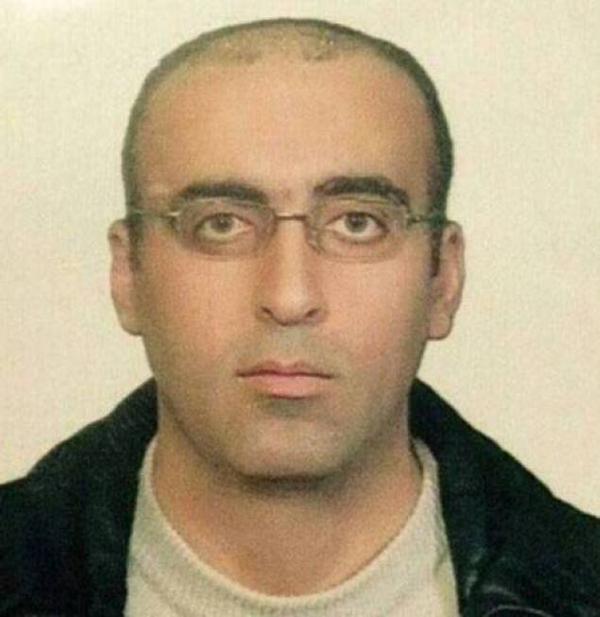
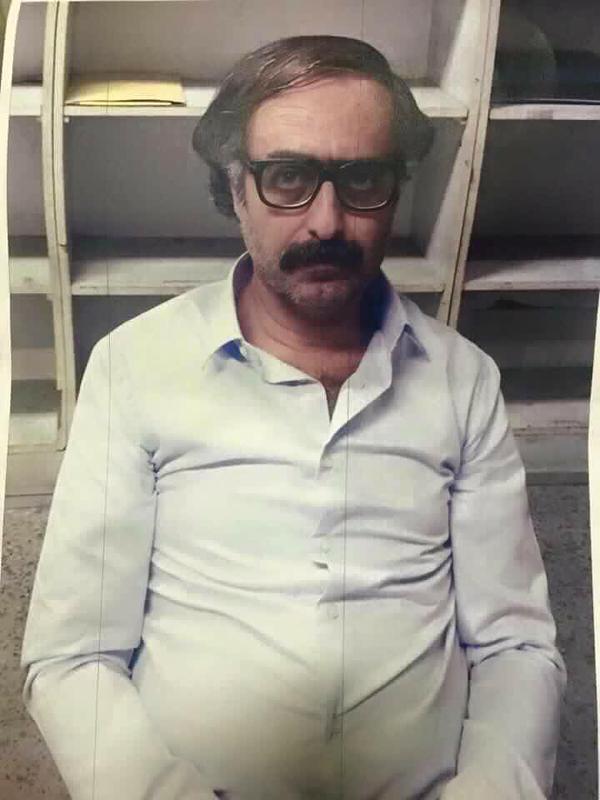
A composite picture of Ahmad al-Assir, with the image on the right showing his most recent appearance. (Photo Credit: Getty Images/Daily Star Lebanon)

Assir was apprehended while attempting to travel with a fake Palestinian passport and a valid Nigerian visa at the Beirut’s Rafik Hariri International Airport early Saturday, August 15, 2015 in Lebanon. He was travelling with another man who was also with a Nigerian visa.
When The Trent reported the arrest of Al Assir with a Nigerian visa in Lebanon, President Buhari ordered a probe on how Assir obtained a Nigerian visa. “The reported‎ arrest of the wanted terrorist is a huge embarrassment to Nigeria and the President has directed that the matter should be investigated,” the ministry official told Vanguard on condition of anonymity.
Foreign Affairs Ministry Bypasses NIS
The Comptoller-General of the NIS, Martin Abeshi revealed this new and important piece of information tonews media in a press conference in Abuja on Wednesday, September 30, 2015. He also revealed that two men connected to Al Assir, whom the fugitive ISIS cleric was visiting in Nigeria have been tracked down and arrested in Kano.
The men, who have not been identified, have been handed over to the National Security Adviser, General Babagana Monguno (Rtd).
“From the record available, the Immigration Service did not issue that visa. It might be the officials of the foreign affairs ministry because they also issue visa on our behalf,” Abeshi revealed.
The Immigration boss also said that the NIS swept into action when the news of the arrest of the ISIS cleric in Lebanon broke and arrested the individuals connected with the fugitive, Assir’s visit to Nigeria.
“When we were told that the person [Al Assir] was heading to Nigeria, the people the man was coming to visit were identified by our men. Our officers in Kano went into action and arrested the two of them immediately and handed them over to the National Security Adviser,” he said.
The status of the probe ordered by President Buhari into this threat to Nigeria’s national security has not been made public.
Two Years A Fugitive


View image on Twitter
View image on TwitterView image on TwitterView image on Twitter

New face of IS linked fugitive cleric, Ahmad al-Assir who was en route Nigeria via Cairo.
Prior to his arrest, Sheikh Assir has been on the run for two years. He was declared wanted in Lebanon in 2013 when his followers clashed with the Lebanese army killing at least 18 soldiers.
The radical cleric was relatively unknown prior to the outbreak of the Syrian war in 2011. But, he quickly gained notoriety as a “a self-proclaimed defender of Sunni rights” due to his fiery anti-Hezbollah rhetoric. Hezbollah is Lebanon’s Shia movement which backs Syria’s President Assad. He had been recruiting his followers to join the Islamic State terrorist group (ISIS) in Syria fighting against Assad’s government.
Violence broke out in 2013 when one of Assir’s men was caught with unlicensed weapons in his car at a military checkpoint in Sidon, south of Beirut. In reaction, Assir’s followers opened fire on the soldiers manning the checkpoint sparking a two-day battle between his militants and the army.
According to reports, machine guns and rockets were used on the Lebanese troops by Assir’s men in fierce fighting which ended with at least 18 soldiers and 40 militants dead. Heavy weapons and military-style uniforms were discovered in Assir’s compound.
Assir is regarded as media savvy and is known for his publicity stunts.
Implications For Nigeria’s President Buhari
Alexander Mukhtar Dan’Iyan, the editor-in-chief of the 15Past8 Media Group based in New York City, who tweets via @MrAyeDee on Twitter, says that Assir is the ”unofficial de-facto Emir of ISIS in Lebanon”.

The Trent raised serious questions for the Nigerian government because of the twin issues of Assir’s fugitive status and his links with ISIS.
How would a radical Muslim cleric, a fugitive linked to ISIS be granted a Nigerian visa on a fake Palestinian passport? What was Assir’s mission in Nigeria? Who are his contacts in Nigeria? Who was he communicating with in Nigeria? Where was he planning to stay in Nigeria? Most importantly, who granted his visa and based on what recommendations?
The incursion of ISIS into a Boko Haram ravaged Nigeria gives Nigerian authorities more cause to worry as Boko Haram attacks continue to increase since President Muhammadu Buhari assumed office on May 29, 2015.
In March 2015, Richard Grenell, a former spokesman for four United States Ambassadors to the United Nations, raised an alarm about the dangers of a Buhari presidency for Nigeria and the whole of Africa.
In an article titled “Nigeria on the brink” which was published in the Washington Times, a US based publication, Grenell observed that the former military Head of State was working tirelessly to introduce the Sharia law across the country, which according to him would further pose a major challenge to the fight against terrorism in Nigeria and Africa in it’s entirety.
Sheikh Ahmad al-Assir

Buhari (Rtd) at an All Progressive Congress event
According to Grenell, “Western foreign policy observers pre-occupied with the rise of ISIS in the Middle East should wake up to the reality unfolding in Nigeria. Opposition candidate General Buhari wants Sharia law throughout Nigeria. In fact, he wants it everywhere.
“Is this an indication that Buhari supports violence because the end goal of the terrorist attacks throughout Nigeria and Africa is an Islamic state? It is a legitimate question that should be asked by leaders of the Obama administration.
“Boko Haram has pledged its allegiance and support to ISIS. The Northern Nigerian based Islamic terrorist group wants Sharia law throughout the country and beyond. They are also actively terrorising Chad, Niger and Cameroon with their goal of an Islamic state.
“Buhari has also spoken sympathetically about members of the terrorist group Boko Haram, has cautioned against a rush to judgement on its members and has personally been selected by the terrorist group to lead its negotiations with the Government of Nigeria.
“Buhari’s election as Nigeria’s head of state would be a disaster for Africa. It would also signal trouble for the West’s fight against ISIS and terrorism throughout the Middle East.”
Source thetrentonline

Friday, 2 October 2015

People’s Opinion on the Establishment of Radio Biafra and Biafra Television.

People’s Opinion on the Establishment of Radio Biafra and Biafra Television.
By Chisom David
(For Family Writers)
Radio Biafra

The rise of new Radio Biafra satellite technology was predicted to spell the end of the Nigeria media and any false broadcasting stations. But despite the way the Nigerian government tried to stop radio Biafra by buying sat link broadcasting satellite which carries radio Biafra signal, with all their wasted effort with over 20million dollar spent, we the Biafrans prevailed against them,because Chiukwuokikeabiama is our strength and refuge.

Is a thing of joy to have gotten a new radio Biafra satellite, It seems the simple pleasure of listening to the new radio Biafra is what makes indigenous people of Biafra happier. The Media and the Mood of the Nation study found that people who regularly watched Biafra television or listened to the radio Biafra were happier and had more energy than those that listen or watch Nigeria broadcast because its full of lies and deceit. From what I found, radio Biafra had the most mood-enhancing effect, with listeners saying that it lifted their happiness levels 100 per cent and energy levels by 300 per cent, compared to those listening to Nigeria media and Sahara reporters. The report from listeners says: ‘Radio Biafra is chosen by indigenous people of Biafra and the world where it is been broadcasted as a lifestyle support system, to help people feel better as they go about their daily lives and it tends to make people know the true value of truth, radio Biafra provides a consistent environment themed and shaped to suit the listener’s needs at any given time of day which is also the mouth piece of the IPOB, and one that is generally upbeat in tone.

The research I did made me to understand that the biggest mood enhancer for people was listening to radio Biafra while surfing the web, because they were able to enjoy the 'company' of Our able Director Mazi Nnamdi Kanu while achieving more practical things online. A spokesman for Radio Biafra said: ‘With consumer confidence affecting national mood and economy, these findings illustrate how powerful a boost media, and radio Biafra in particular, can be to both.’ The findings came at a time when radio Biafra listeners all over the world has reached a record high which made tune in to crash at a certain point. Radio Biafra tends to show the world how people agitates for their freedom by evangelizing through media, it has enlighten the IPOB and the world listeners that people can agitate for their freedom through media without violating any human rights or causing violence. That’s what radio Biafra stands for and not hate but we speak and stands for truth and Justice, ALL HAIL BIAFRA.

Responsive Full Width Ad

Copyright © 2016 Biafratimestest, powered by Blogger.
Loading...